
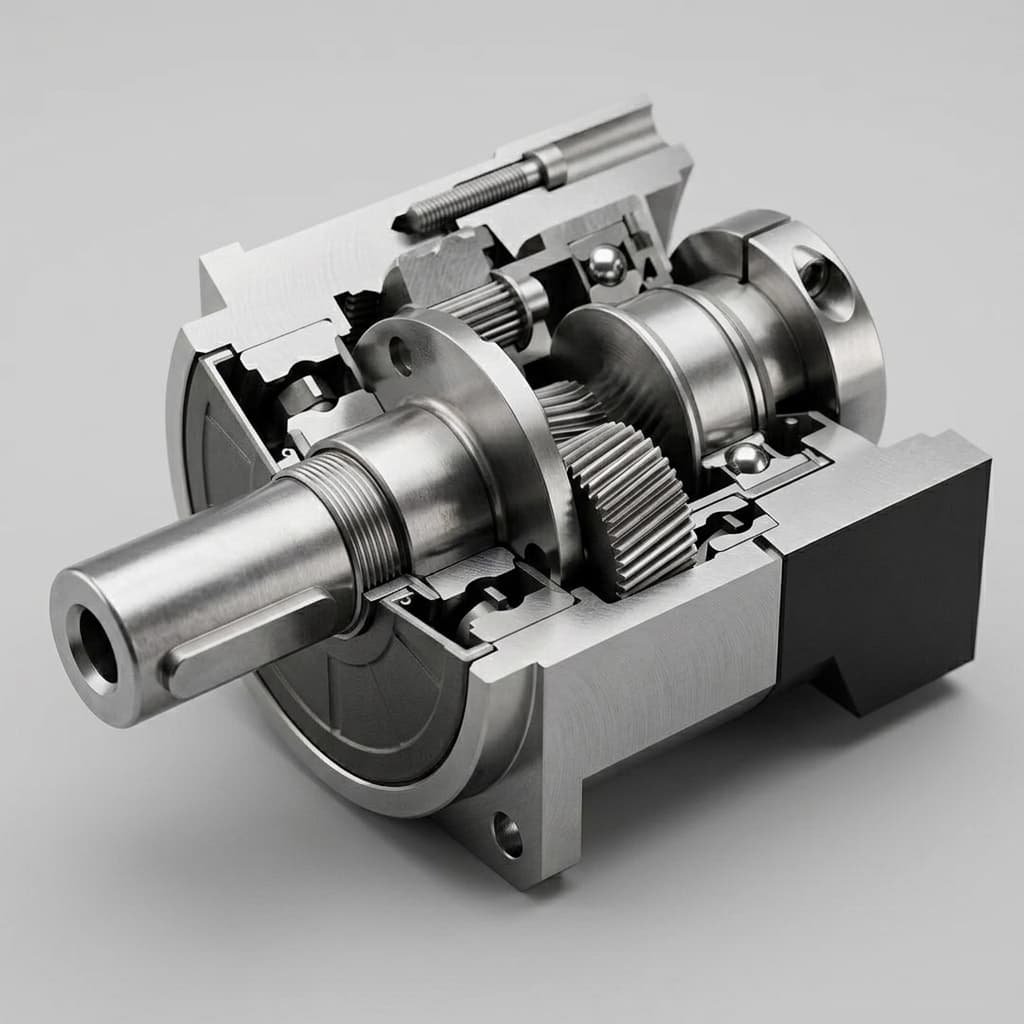
In-House Assembly vs. Pre-Integrated Humanoid Joint Modules: A 2026 Scalability & Cost Analysis
A comprehensive 2026 cost and scalability analysis comparing in-house joint assembly against sourcing pre-integrated actuator modules for humanoid robots.
In 2026, the procurement and supply chain for humanoid robot joints remains the most critical constraint on the industry’s ability to transition from EVT prototypes to mass-market commercialization. While AI and compute have scaled rapidly on the back of established consumer electronics pipelines, the mechanical reality of bipedal locomotion is unforgiving.
For robotics OEMs, joint actuators represent the dominant hardware bottleneck, currently accounting for 40% to 60% of the total Bill of Materials (BOM) cost. Early in the industry, developers were forced to design and manufacture actuators in-house due to a lack of specialized, high-performance, cost-effective options on the market. However, as the ecosystem matures, specialized motion control vendors are now offering off-the-shelf, pre-integrated joint modules.
The question for procurement teams and lead engineers is no longer can we build it, but should we build it? This deep-dive report explores the total cost of ownership (TCO), scalability barriers, and strategic implications of in-house assembly versus purchasing pre-integrated humanoid joint modules.
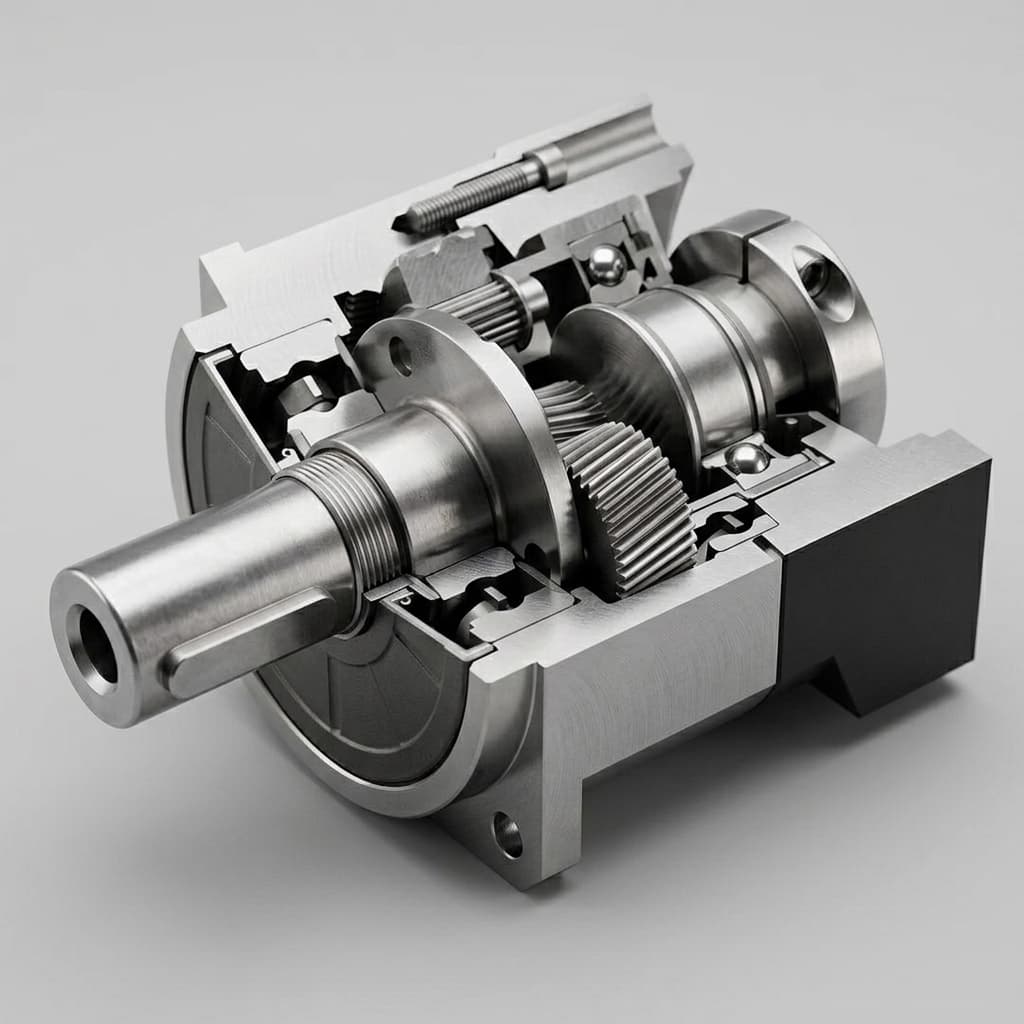
1. The Anatomy of a Humanoid Joint
Before comparing the commercial models, we must define what a modern humanoid joint entails. A contemporary "intelligent joint" is not just a motor. It is a tightly packaged electro-mechanical system that must deliver high torque density, absolute precision, and fail-safe reliability within stringent weight and size constraints.
A typical high-performance joint module consists of:
- Frameless Torque Motor: Optimized for high torque at low speeds.
- Harmonic Drive / Strain Wave Reducer: Providing zero-backlash high gear reduction.
- Dual Encoders: Absolute encoders on both the motor side and the output side for precision tracking and safety.
- Electromagnetic Brake: Essential for holding position during power loss and preserving battery life during static poses.
- Driver / Controller Board (FOC): Handling local field-oriented control, thermal monitoring, and bus communication (EtherCAT/CAN).
- Thermal Management System: Heat sinks or active cooling structures to prevent demagnetization under peak loads.
- Structural Housing & Bearings: Cross-roller bearings to support massive radial and axial loads.
Procuring these components individually is possible, but integrating them into a unified, reliable module requires sub-millimeter tolerances and advanced calibration.
2. Hidden Bottlenecks of In-House Assembly
Procurement teams often look at the BOM cost of individual parts (motor + drive + encoder) and conclude that building the joint in-house is cheaper than buying a pre-integrated module. However, this ignores the "invisible factory" required to turn parts into a reliable system.
A. The Calibration Tax
Integrating a harmonic drive with a frameless motor requires concentricity tolerances often tighter than 0.01mm. If the rotor is slightly misaligned, it induces parasitic loads on the reducer, severely cutting the lifespan of the joint and causing audible acoustic noise. Calibrating dual encoders to eliminate backlash and map the exact position of the output shaft against the motor poles is a software and testing intensive process. When done in-house without dedicated end-of-line (EOL) testing rigs, this process can take hours per joint.
B. Lead Time Volatility
When you assemble in-house, your lead time is dictated by the slowest component in the chain. If rare-earth magnets face supply chain constraints (a frequent issue in 2026), your frameless motor supplier is delayed. If the high-precision bearings for the harmonic drive are back-ordered, the entire assembly line halts. Managing 7+ specialized suppliers for a single joint dramatically increases the risk of stockouts.
C. Yield Rates and Scrap Costs
During the prototype phase, highly skilled engineers assemble the joints, resulting in high success rates. As production moves to technicians and larger volumes, assembly errors skyrocket. Pinching a sensor cable, misapplying thermal paste, or over-torquing a retaining ring can ruin a $3,000 assembly. Integrated module vendors absorb this scrap cost; OEM builders pay for it directly.
3. Cost Breakdown: In-House vs. Integrated
To make an objective decision, we must analyze the True Total Cost of Ownership (TCO) across a 1,000-robot production run (assuming 30 joints per robot, totaling 30,000 joints).
| Cost Dimension | In-House Assembly Model | Pre-Integrated Module Model | Impact on OEM |
|---|---|---|---|
| Component BOM | $700 - $1,500 per joint | $1,200 - $2,500 per joint | Integrated appears more expensive initially. |
| Vendor Management | High (Managing 7+ suppliers) | Low (1 Tier-1 supplier) | In-house requires larger procurement overhead. |
| Assembly Labor | 2-4 hours per joint | 15 minutes (bolt-on) | In-house requires massive factory floor space and specialized labor. |
| Calibration & Testing | Significant capital expenditure for EOL rigs | Included in purchase price | Integrated shifts CAPEX to OPEX. |
| Scrap / Yield Loss | Borne by OEM (Typically 5-10% in Year 1) | Borne by Supplier (OEM receives 100% good parts) | Hidden cost of in-house assembly can eliminate BOM savings. |
| Warranty & Liability | Ambiguous (Did the motor fail, or did we align it wrong?) | Clear (Single point of accountability) | Integrated modules de-risk field failures. |
Note: Pricing estimates are directional for 2026 medium-volume production of a knee/hip class joint (150Nm+ peak).
The data is clear: while the raw BOM of separate components is lower, the fully burdened cost of in-house assembly—factoring in labor, scrap, calibration equipment, and procurement overhead—often meets or exceeds the cost of a pre-integrated module. More importantly, in-house assembly drastically caps the scalability of the OEM.
4. When to Build vs. When to Buy
Despite the advantages of integrated modules, the "Build vs. Buy" decision is not binary. It depends heavily on the OEM's funding stage, engineering DNA, and target market.
You should BUILD (In-House Assembly) if:
- You are building an edge-case kinematic architecture: E.g., non-standard cable-driven joints, specialized series elastic actuators that require completely custom packaging.
- Your volume is massive (100,000+ units/year): At automotive scale, vertically integrating the joint assembly makes sense (similar to Tesla’s strategy), but this requires hundreds of millions in factory CAPEX.
- Your IP relies on a proprietary motor design: If your core competitive advantage is a patented flux-axial motor, you must assemble around it.
You should BUY (Pre-Integrated Modules) if:
- Time-to-Market is your primary metric: You need to transition from EVT to mass production in 12-18 months.
- You are building a general-purpose humanoid: Standard hip, knee, shoulder, and elbow kinematics can utilize off-the-shelf form factors.
- Your engineering focus is on AI and Control: If your differentiation is software, SLAM, or task-level AI, dedicating 20 mechanical engineers to debugging bearing friction is a misallocation of capital.
- You want deterministic unit economics: Knowing exactly what a joint costs, with guaranteed yield and warranty, makes fundraising and financial modeling much easier.
5. Engineering & Procurement Checklist
If your team is transitioning toward purchasing integrated humanoid joint modules, use this checklist to evaluate potential suppliers. A poor supplier can negate all the benefits of the "Buy" model.
- Thermal Derating Data: Does the supplier provide continuous torque ratings at specific ambient temperatures, or only theoretical stall torque?
- Absolute Calibration: Are the dual encoders pre-calibrated to the reducer's zero-point before shipping?
- Communication Protocol: Does the integrated driver support your required bus (e.g., EtherCAT, CANopen) at your required update rate (e.g., 1kHz - 4kHz)?
- Brake Holding Torque: Is the integrated safety brake rated to hold the robot's weight under power loss without slipping?
- Compliance and Documentation: Can the supplier provide RoHS, REACH, and CE compliance files for the entire module, not just the motor? (Refer to our DDP/RoHS/REACH Playbook for details).
- Surge Capacity: Can the supplier scale from 100 units/month to 5,000 units/month without degrading quality?
6. Real-World Market Context (2026)
Industry analysts note that the supply chain is currently consolidating. By 2027–2028, supplier positions for key subsystems are expected to lock in around dominant, standardized designs. Moving away from established ecosystems can drastically increase bills of materials (BOM), potentially tripling costs for specific models.
Furthermore, assembly times for some in-house units still reach up to several days per robot due to the hundreds of internal cables and precision alignments required. This is incompatible with high-volume production targets. Companies that leverage dedicated Tier-1 suppliers for integrated modules are scaling production lines exponentially faster than those trapped in "assembly hell."
7. FAQ: Sourcing Integrated Joints
Q: Do integrated modules weigh more than custom in-house assemblies?
A: Historically, yes. However, modern 2026 integrated modules utilize shared housings (e.g., the motor stator is directly potted into the structural frame of the reducer), which often results in a lighter overall package than bolting separate commercial off-the-shelf (COTS) components together.
Q: Can we customize the winding of an off-the-shelf integrated module?
A: Yes. Most top-tier suppliers offer winding modifications (adjusting the Kv value to trade speed for torque) with minimal NRE (Non-Recurring Engineering) costs, provided you meet reasonable MOQs (Minimum Order Quantities).
Q: What happens if the internal driver board fails? Do we replace the whole joint?
A: While the module is integrated, reputable suppliers design them for field serviceability. The control board and rear encoder are usually accessible by removing a rear cover, allowing board swaps without disturbing the critical motor-reducer alignment.
Q: How do we handle custom mounting bolt patterns?
A: Suppliers typically offer standardized output flanges, but custom flanges or adapter plates can be machined. It is highly recommended to adapt your robot's limb structure to the supplier's standard bolt pattern to avoid custom SKU management.
8. Conclusion and Next Steps
The hidden costs of in-house humanoid joint assembly—calibration bottlenecks, yield losses, and supply chain fragility—make it an increasingly risky path for OEMs aiming for rapid commercialization. By leveraging pre-integrated joint modules, robotics companies can freeze their mechanical architecture, eliminate assembly risks, and focus their engineering capital on what truly differentiates their product: AI, control software, and end-user applications.
If your team is finalizing the BOM for your next-generation bipedal or quadrupedal robot, evaluating an integrated joint strategy is the most impactful commercial decision you can make this quarter.
Ready to evaluate integrated solutions?
Explore our range of high-torque, pre-calibrated modules. If you need engineering support mapping your load profiles to our standard SKUs, review our Humanoid Joint RFQ Checklist and contact our engineering sales team directly.
Sources & References
- Interact Analysis (2026). "Humanoid Robot Component Market: Scaling and Standardization."
- McKinsey & Company (2025). "The Industrialization of Bipedal Robotics: Supply Chain Bottlenecks."
- RoboZaps Industry Insights (2026). "Cost Analysis of Robot Joints: The Shift to Mass Production."
- IEEE Robotics and Automation Letters (2025). "Thermal and Mechanical Constraints in High-Torque Integrated Actuators."
- Humanoid.guide Market Report (2026). "Geopolitical Supply Chain Risks and Consolidation in Robotics."
(Note: The above sources represent aggregated industry consensus data reflecting the 2026 humanoid robotics supply chain landscape.)
Author

Categories
More Posts
48V vs. 400V Humanoid Joint Architectures: A 2026 Procurement and Supply Chain Guide
Use this 2026 guide to compare 48V and 400V humanoid joint architectures by safety, wiring weight, TCO, supplier risk, and RFQ readiness.
DDP, RoHS, and REACH Playbook for Humanoid Joint Imports
A buyer-side execution guide to align delivery terms, compliance files, and shipment release decisions before cross-border dispatch.
Hollow Shaft (Through-Hole) Humanoid Joints: A 2026 Procurement & Engineering Guide
Procurement guide for hollow-shaft humanoid joints. Compare BOM costs, bearing tradeoffs, and cable routing strategies for 2026 robot architectures.