
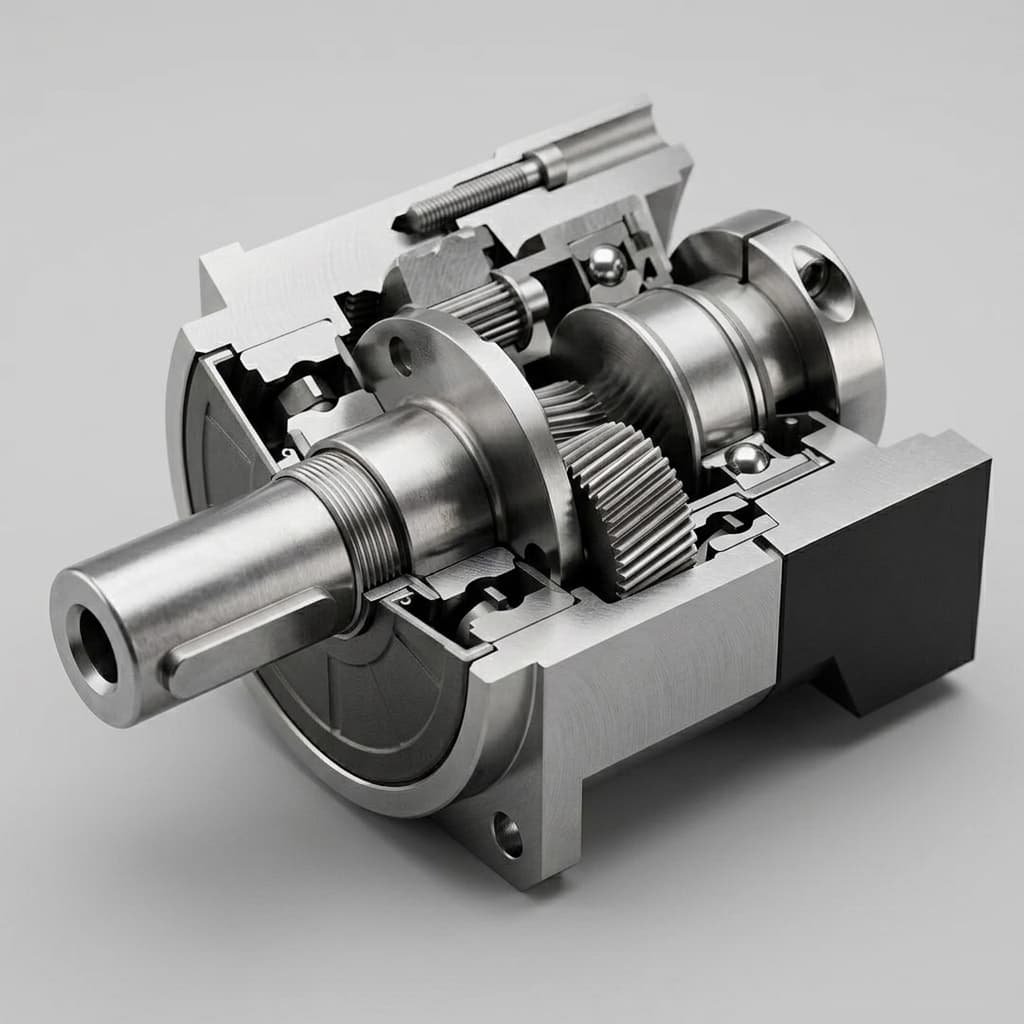
Humanoid Joint RFQ Checklist for OEM Buyers
What to include in your first RFQ email so quotes are comparable, lead times are believable, and engineering rework is reduced.
If your supplier asks ten follow-up questions after your first RFQ email, that is usually not a "slow supplier" problem. It is an input-quality problem.
Most of the RFQ loops I see in humanoid joint programs come from the same pattern: teams ask for a price before they freeze technical assumptions.
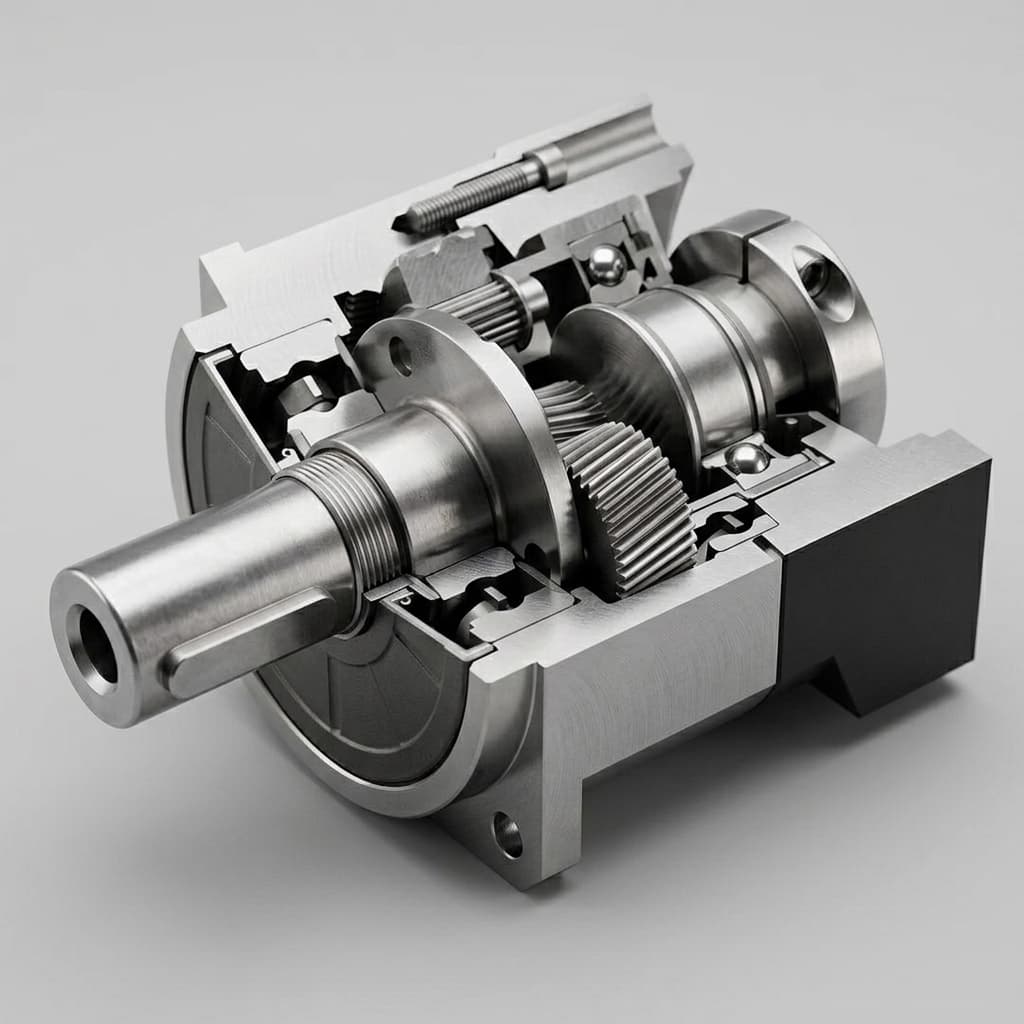
What to Freeze Before Asking for Price
These are the fields that materially change architecture, lead time, and quoted cost:
| Field | Minimum Input | Why it Changes the Quote |
|---|---|---|
| Joint location | e.g. knee pitch, shoulder roll | Changes torque-speed envelope and mechanical package |
| Continuous operating point | Nm @ rpm | Prevents quoting by stall or peak only |
| Peak event | Nm, duration, repetition | Drives overload margin and thermal design |
| Duty cycle + ambient | Work cycle + ambient range | Changes winding and reducer assumptions |
| Control interface | Bus + update rate + fault behavior | Affects electronics and integration effort |
| Mechanical revision | Drawing revision with owner | Avoids quoting against moving interfaces |
| Quantity profile | Sample qty + annual forecast | Determines procurement strategy and lead time |
| Delivery model | Destination + Incoterm + target date | Impacts logistics, docs, and buffer planning |
| Compliance package | Required files by destination market | Prevents shipment-stage document delays |
If any of these are missing, you can still get a number, but it is usually not decision-grade.
For compliant joint concepts, include the spring architecture too. If your team is considering a rotary SEA, use the unidirectional spiral torsion spring SEA screening page to state peak torque, stiffness, reversal share, package envelope, and validation gates before asking for price.
A Practical RFQ Maturity Check
I use this quick triage when buyers share an RFQ draft:
| Level | What the RFQ Looks Like | Typical Supplier Response | Decision Usefulness |
|---|---|---|---|
| L1 Concept | "Need high torque joint, 48V, for impedance control" | Very wide range + many caveats | Low |
| L2 Engineering | Torque-speed + drawing + duty | Directional quote with assumptions | Medium |
| L3 Decision | Full load profile + acceptance gates + ship window | Comparable quote set | High |
For sourcing decisions, aim for L3. Otherwise, internal price comparison often becomes misleading.
Where Quote Drift Usually Starts
A small missing detail can create a large commercial gap later:
| Missing Input | Common Consequence 2-3 Weeks Later |
|---|---|
| No duty cycle | Motor option changes after thermal review |
| No revision lock | Interface update triggers re-quote |
| No compliance scope | RoHS/REACH package not ready at shipment |
| No annual volume assumption | Price is based on wrong procurement model |
That is why a complete first email is faster than "quick RFQ now, details later."
RFQ Email Template (Buyer-Side)
Use this as the body of your first email:
Subject: RFQ - Humanoid Joint Program - <Project Name>

Program stage: EVT / DVT / PVT / MP
Target joint location:
Continuous operating points (Nm @ rpm):
Peak events (Nm, duration, frequency):
Duty cycle and ambient temperature:
Control and communication interface:
Mechanical drawing revision(s):
Prototype quantity / annual forecast:
Required compliance package:
Destination market / Incoterm / target ship date:
Expected quote return date:
Sample acceptance criteria:
Attach drawings and load worksheets in the same thread. Do not split them across multiple follow-up emails.
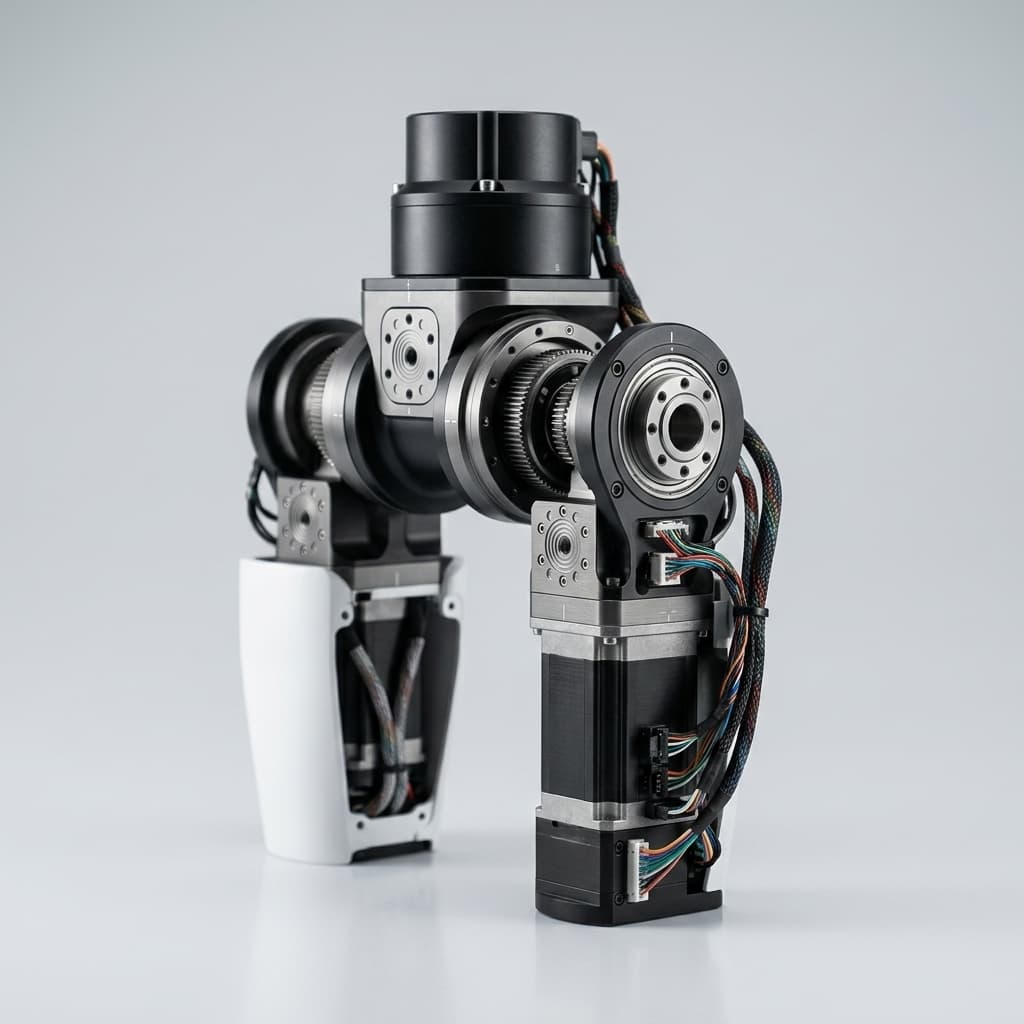
How to Compare Supplier Replies Fairly
Before ranking by unit price, score response quality first:
| Dimension | Weight | What Good Looks Like |
|---|---|---|
| Technical fit | 35 | Architecture matches your defined load envelope |
| Assumption clarity | 20 | All assumptions are explicit and checkable |
| Validation plan | 15 | Sample test gates are measurable |
| Lead-time credibility | 15 | Capacity and critical path are explained |
| Compliance and delivery readiness | 15 | File list and ownership are clearly assigned |
I usually advise teams to keep suppliers below 75/100 out of final commercial ranking, even if price looks attractive.
Three Red Flags in "Cheap" Quotes
- Key assumptions are hidden in footnotes.
- Sample validation scope is not tied to pass/fail criteria.
- Delivery and compliance ownership is described with generic language only.
These are common sources of downstream delays and unplanned cost.
Final Go/No-Go Before Sending RFQ
Go: Full input package, revision lock, acceptance criteria are written.Hold: Peak-event definition or duty-cycle data is missing.Escalate: Target price exists but engineering acceptance gate does not.
If you want me to review your RFQ package before you send it, contact [email protected] or WhatsApp +86 18857971991.
Related Pages
More Posts

DDP, RoHS, and REACH Playbook for Humanoid Joint Imports
A buyer-side execution guide to align delivery terms, compliance files, and shipment release decisions before cross-border dispatch.

48V vs. 400V Humanoid Joint Architectures: A 2026 Procurement and Supply Chain Guide
Use this 2026 guide to compare 48V and 400V humanoid joint architectures by safety, wiring weight, TCO, supplier risk, and RFQ readiness.
Functional Safety in Humanoid Joints: Sourcing for ISO 10218:2025 & ISO 25785-1
Source humanoid robot joints with dual encoders, brakes, and STO for ISO 10218:2025, ISO/CD 25785-1, and safety RFQ reviews.