
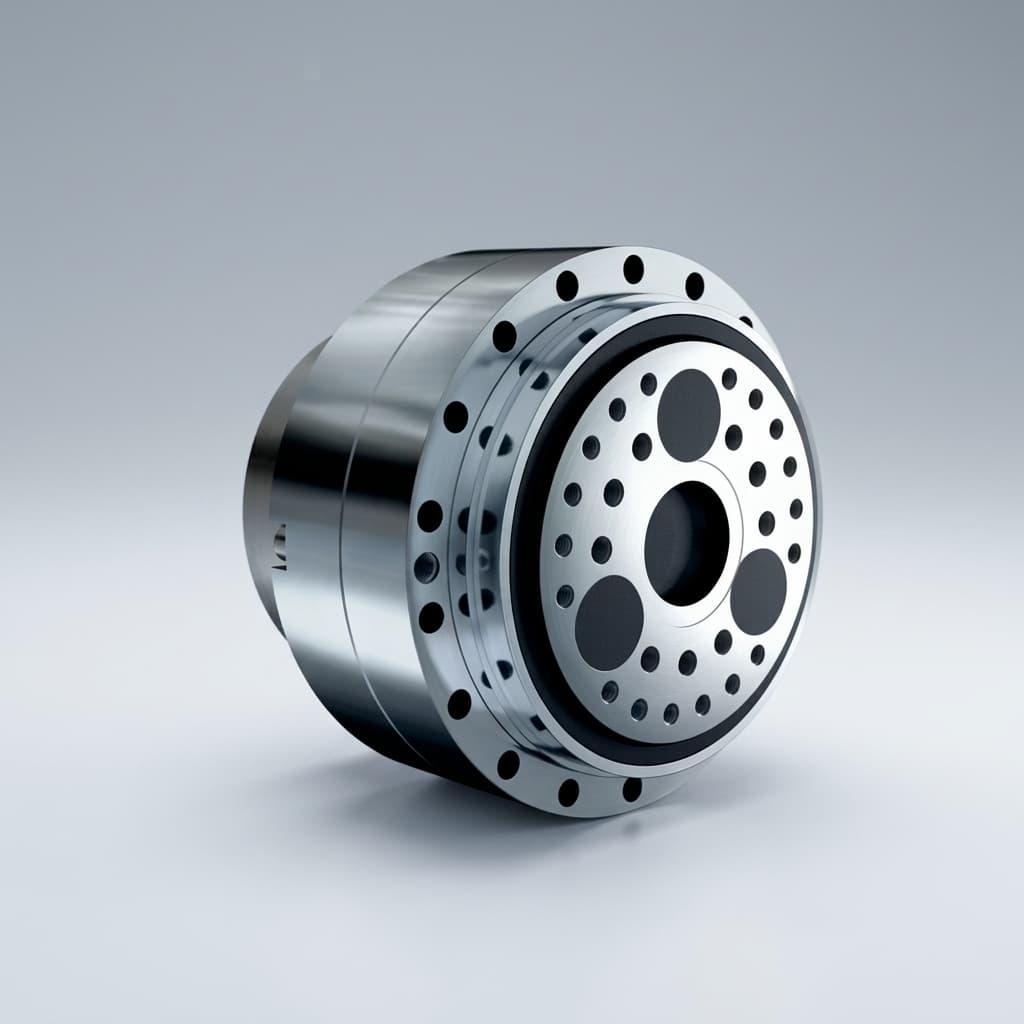
A Unidirectional Series-Elastic Actuator Design Using a Spiral Torsion Spring
Screen whether a unidirectional spiral torsion spring is a plausible SEA path, then review evidence, risks, comparison options, and RFQ inputs.
SEA concept screening tool
Check whether a unidirectional spiral torsion spring is a plausible SEA path.
Enter the first-order load and package assumptions. The result flags fit, deflection, reversal risk, and the minimum validation path before an RFQ or prototype review.
Defaults match a common compact SEA screening case: 15 N m and 200 N m/rad.
Calculated as torque divided by stiffness.
Higher values need earlier FEA and process review.
- No screening red flag, but FEA and bench testing are still required.
Core conclusion
A unidirectional spiral torsion spring SEA is not just another definition of a series elastic actuator. It is a narrow mechanical architecture: compact rotary compliance, a biased torque direction, and a spring deflection signal that must survive stress, hysteresis, and bandwidth checks.
Decision summary for buyers and engineering teams
The exact title is indexed by ASME and cited in later SEA torsional spring literature.
A later monolithic torsional SEA module reports 98 N m/rad and 7.68 N m max torque at module level.
Carpino et al. report simulation/test agreement with 6% maximum resultant error, a useful correlation benchmark.
| Decision question | Go signal | Hold signal | Minimum next action |
|---|---|---|---|
| Torque direction | Mostly one-way load | Frequent reversal | Add torque histogram to RFQ |
| Deflection | Enough for sensing, acceptable for ROM | Consumes joint travel | Run theta = T/k and collision check |
| Spring evidence | FEA and bench curve planned | CAD only | Ask for stress and hysteresis report |
| Manufacturing | Feature limits known | Thin web guesswork | Confirm WEDM/CNC/material process |
| Control | Bandwidth target exists | Only peak torque exists | Define torque bandwidth and encoder resolution |
Methodology and assumptions
The tool uses only screening math and public evidence. It does not estimate stress concentration, fatigue life, nonlinear stiffness, residual deformation, or manufacturability. Those require geometry, material, surface treatment, process capability, and test fixture data.
Calculation logic
- Elastic deflection is calculated as peak torque divided by target stiffness.
- Reversal share penalizes the fit because the searched design is explicitly unidirectional.
- High duty cycle increases the fatigue and temperature validation burden.
- Small package dimensions reduce confidence until stress and feature limits are proven.
Evidence and source map
| Source | What it supports | How this page uses it |
|---|---|---|
| Knox and Schmiedeler, ASME Journal of Mechanical Design, 2009, 131(125001), pp. 1-5 | Original titled reference for the unidirectional SEA using a spiral torsion spring. | Treat as a design precedent, not a catalog-ready specification. |
| Carpino et al., compact torsional spring for SEAs, Journal of Mechanical Design, 2012 | Reports 85 mm diameter, 3 mm thickness, 61.5 g, 98 N m/rad stiffness, 7.68 N m maximum torque, and 6% maximum resultant simulation/test error for a monolithic torsional spring module. | Benchmark for compact torsional spring validation and evidence format. |
| Paine, Oh, and Sentis, IEEE/ASME Transactions on Mechatronics, 2014 | Frames high-performance SEA design around torque bandwidth, spring stiffness, friction, reflected inertia, and control stability. | Explains why stiffness choice cannot be separated from controller and drivetrain design. |
| Williamson, MIT, Series Elastic Actuators, 1995 | Foundational SEA concept: force/torque is inferred from elastic deflection and controlled through actuator motion. | Baseline for explaining the SEA measurement model. |
Evidence checked on 2026-06-03. Public snippets confirm the ASME article title and citation data, while detailed original geometry and test values may require publisher access or author-supplied drawings.
Architecture comparison
| Option | Best fit | Strength | Limit |
|---|---|---|---|
| Unidirectional spiral torsion SEA | Biased or one-way torque programs where compact rotary compliance matters. | Compact packaging and direct torsional deflection sensing. | Poor fit when comparable bidirectional torque, high reversal fatigue, or symmetric collision response is required. |
| Double spiral or symmetric planar torsion spring | Bidirectional torque sensing and lower radial-force artifacts. | More balanced response around zero torque. | More geometry and manufacturing complexity; still needs FEA and hysteresis testing. |
| Compression springs converted to rotary torque | Prototype rigs where off-the-shelf spring replacement is useful. | Easier sourcing and stiffness swapping. | Linkage friction, backlash, cable stretch, and packaging can reduce force fidelity. |
| Direct-drive or quasi-direct-drive torque control | High bandwidth joints where compliance is mostly software-defined. | Avoids physical spring bandwidth penalty. | Needs low reflected inertia, reliable current-torque model, and separate collision mitigation. |
| Load cell or output torque sensor | When measurement fidelity is required without adding large deflection. | Direct measurement path. | Cost, overload protection, cabling, calibration drift, and mechanical integration burden. |
Risk notes and mitigations
Overusing a one-way spring in reversing torque
Signal: Torque reverses often or impact can arrive from either direction.
Mitigation: Use a symmetric spring, dual-spring preload architecture, or hard-stop protection with bidirectional validation.
Stiffness chosen without bandwidth target
Signal: Only peak torque and outer diameter are specified.
Mitigation: Freeze target torque bandwidth, encoder resolution, controller update rate, and allowable deflection before CAD detail.
FEA result treated as release evidence
Signal: No bench torque-angle, hysteresis, fatigue, or overload data.
Mitigation: Require a torque-angle rig, cyclic test plan, and correlation error report before PO release.
Manufacturing minimum feature ignored
Signal: Very thin spiral arms are proposed without WEDM/CNC process limits.
Mitigation: Ask the supplier to state minimum web thickness, material heat treatment, surface finish, and inspection method.
Spring deflection steals joint range
Signal: Joint ROM is tight and the SEA deflection is not included in kinematic checks.
Mitigation: Subtract maximum elastic deflection from available joint travel and check collision at both loaded endpoints.
Scenario examples
Humanoid knee assist prototype
Premise: 18 N m peak assist, biased positive torque, 95 mm radial envelope.
Outcome: Promising if 6-9 degrees peak deflection is acceptable and validation includes fatigue under gait-like cycles.
Collaborative wrist with reversing contact
Premise: 4 N m peak, frequent direction changes during manipulation.
Outcome: Borderline to hold. Symmetric compliance or torque sensing is usually safer than one-way spiral behavior.
Quadruped impact joint
Premise: High shock loads, bidirectional ground impacts, high bandwidth recovery.
Outcome: Hold unless a protected dual-direction architecture and overload path are proven by impact testing.
Lab force-control demonstrator
Premise: Low duty cycle, one-way loading, educational torque-control rig.
Outcome: Good prototype candidate if the spring is not used as production safety evidence.
RFQ input checklist
Load data
Peak torque, continuous torque, torque-speed points, duty cycle, shock events.
Direction data
Percent one-way loading, reversal events, collision direction assumptions.
Package data
Outer diameter, thickness, shaft interface, bearing layout, hard-stop envelope.
Control data
Target torque bandwidth, encoder resolution, controller update rate, acceptable delay.
Spring evidence
Material, heat treatment, FEA assumptions, stress limit, fatigue target.
Release gate
Torque-angle linearity, hysteresis, overload, residual deflection, correlation error.
FAQ
Design Fit
Is a unidirectional spiral torsion spring a general SEA solution?
No. It is a specialized rotary compliance concept for biased torque directions. It should be screened against bidirectional load cases before detail design.
When is this concept worth prototyping?
It is worth a prototype when the torque direction is predictable, packaging is disc-like, and the buyer can fund FEA plus torque-angle bench validation.
When should I avoid it?
Avoid it when the joint sees frequent torque reversal, aggressive impact from both directions, or a requirement for high torque bandwidth with minimal deflection.
Can it replace a torque sensor?
Only if the spring deflection measurement, stiffness calibration, hysteresis, and temperature behavior meet your error budget.
Sizing And Validation
What is the first sizing equation?
Use deflection = torque / stiffness. It is only a screening equation; stress, fatigue, stops, and manufacturability still need detailed analysis.
What deflection is usually too high?
There is no universal limit, but more than 8-10 degrees at peak torque often forces an early ROM and bandwidth review for compact humanoid joints.
What should be in the test report?
At minimum: torque-angle linearity, hysteresis, residual deflection, overload result, cyclic fatigue plan, temperature note, and FEA/test correlation.
Can published research numbers be copied into my design?
No. Published dimensions and stiffness values are references only. Your material, process, torque cycle, and safety factor define the actual design.
Procurement
What should an RFQ include?
Send peak and continuous torque, duty cycle, torque direction split, target stiffness, maximum deflection, package diameter, thickness, shaft interface, and validation gates.
What is the biggest supplier red flag?
A supplier claiming spring fit from CAD screenshots without FEA assumptions, material data, feature limits, or bench-test plan.
How should I compare it with a quasi-direct-drive joint?
Compare not only peak torque, but reflected inertia, torque bandwidth, impact tolerance, current sensing quality, and failure-mode behavior.
Can Humanoid Joint build this exact paper design?
Treat the page as an engineering intake and review path. Exact paper replication depends on IP, drawings, material/process constraints, and application validation.
Turn the screening into an engineering review.
Send the load case, stiffness target, envelope, and validation gates. We will respond with the smallest next review package: assumptions to freeze, missing data, and whether this should move to FEA, prototype, or a different actuator architecture.
More Posts
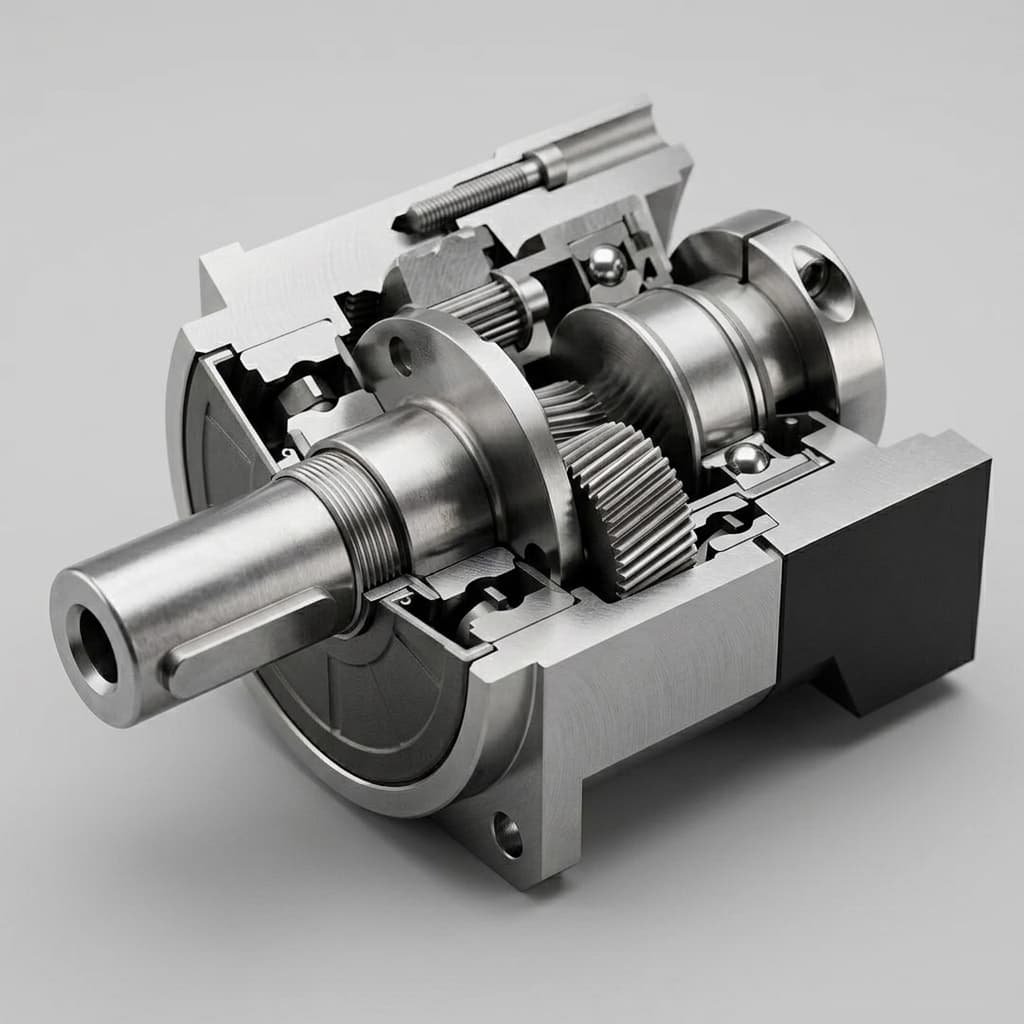
Harmonic vs. Cycloidal Drives in Humanoid Joints: Navigating Fatigue Failure
Compare harmonic and cycloidal drives for humanoid robot joints, fatigue risks, shock loads, and supplier checks before selecting durable actuator modules.

How to Audit Manufacturing and QA Before PO Release
A buyer-side field guide for auditing CTQ control, measurement reliability, and lot traceability before committing volume.

Active Short Circuit (ASC) vs. Mechanical Brakes in Humanoid Joints: Sourcing for ISO 13482
Compare ASC vs mechanical brakes for humanoid joints in 2026 sourcing. See SGF, BOM, weight, ISO 13482 limits, and RFQ checks before contacting engineering.