
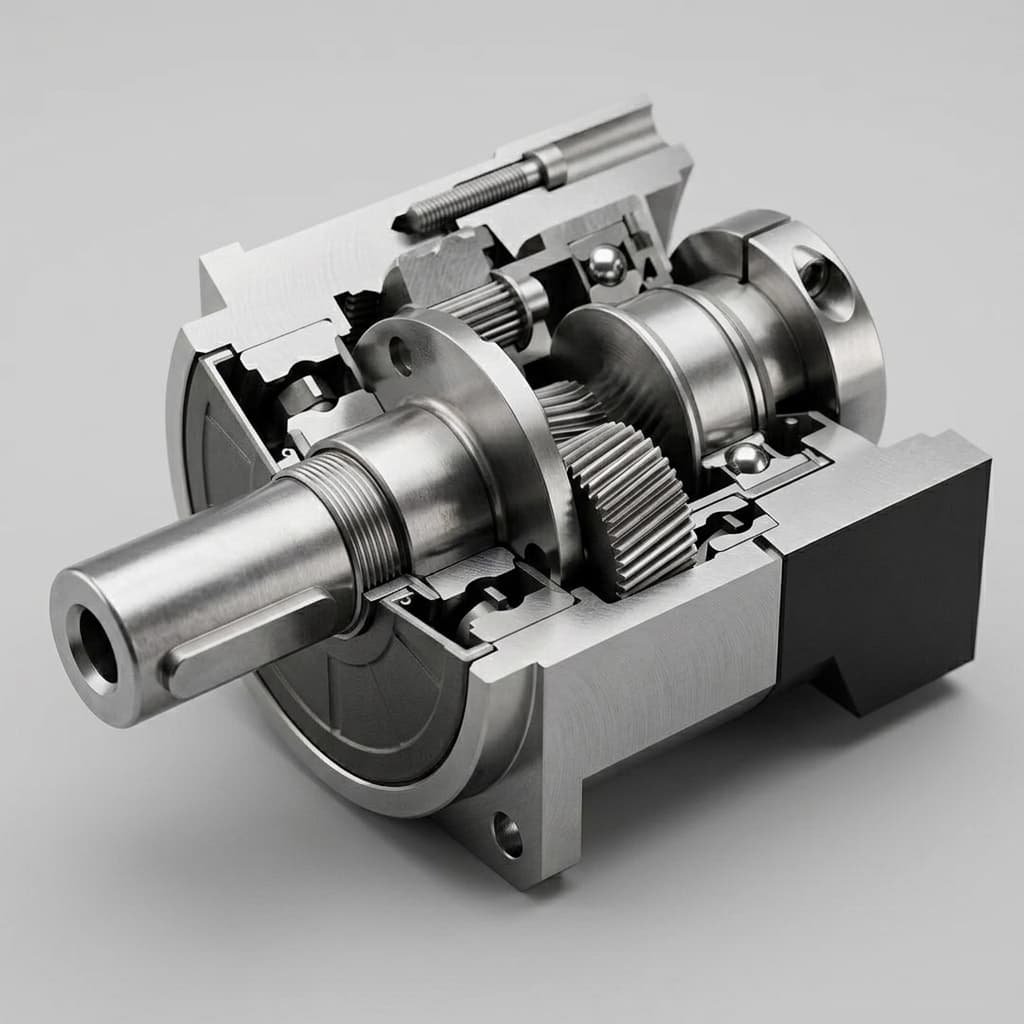
The Humanoid Joint Thermal Wall: Sizing & Procurement Guide for OEM Buyers
Size continuous torque, compare materials, request derating data, and contact us with RFQ inputs using this humanoid joint thermal wall guide.
If you are buying integrated joint modules for humanoid robots, you have likely encountered a frustrating discrepancy: the joint that performs perfectly in a 10-second burst test suddenly overheats, trips its driver, and shuts down during a 15-minute continuous walking cycle.
This is not necessarily a defect in the motor. You have simply hit the "thermal wall"—a scaling limit that the humanoid robotics industry formally recognized as a mass production bottleneck in mid-2026.
When you cram a high-torque frameless motor, a harmonic reducer, absolute encoders, and a motor driver into a sealed cylinder with less than 5cm³ of internal air space, the heat has nowhere to go. Procurement teams who buy based solely on "peak torque" specifications often find themselves stuck with unusable inventory because the joint's continuous torque rating degrades drastically once it reaches thermal saturation.
This guide is written for procurement teams, buyers, and hardware engineers who need to source humanoid robot joints that survive real-world thermal loads. It applies to sealed, high-torque integrated joints for humanoid legs, hips, waists, shoulders, and elbows. It does not replace supplier-specific thermal testing, dynamometer validation, or safety certification. We will cover the physics of the thermal wall, how housing materials affect heat dissipation, and the specific questions you must ask suppliers during the RFQ process.
If you already have a target gait load case, compare this guide with our humanoid joint RFQ checklist and the integrated humanoid joint module reference page before asking suppliers for pricing.
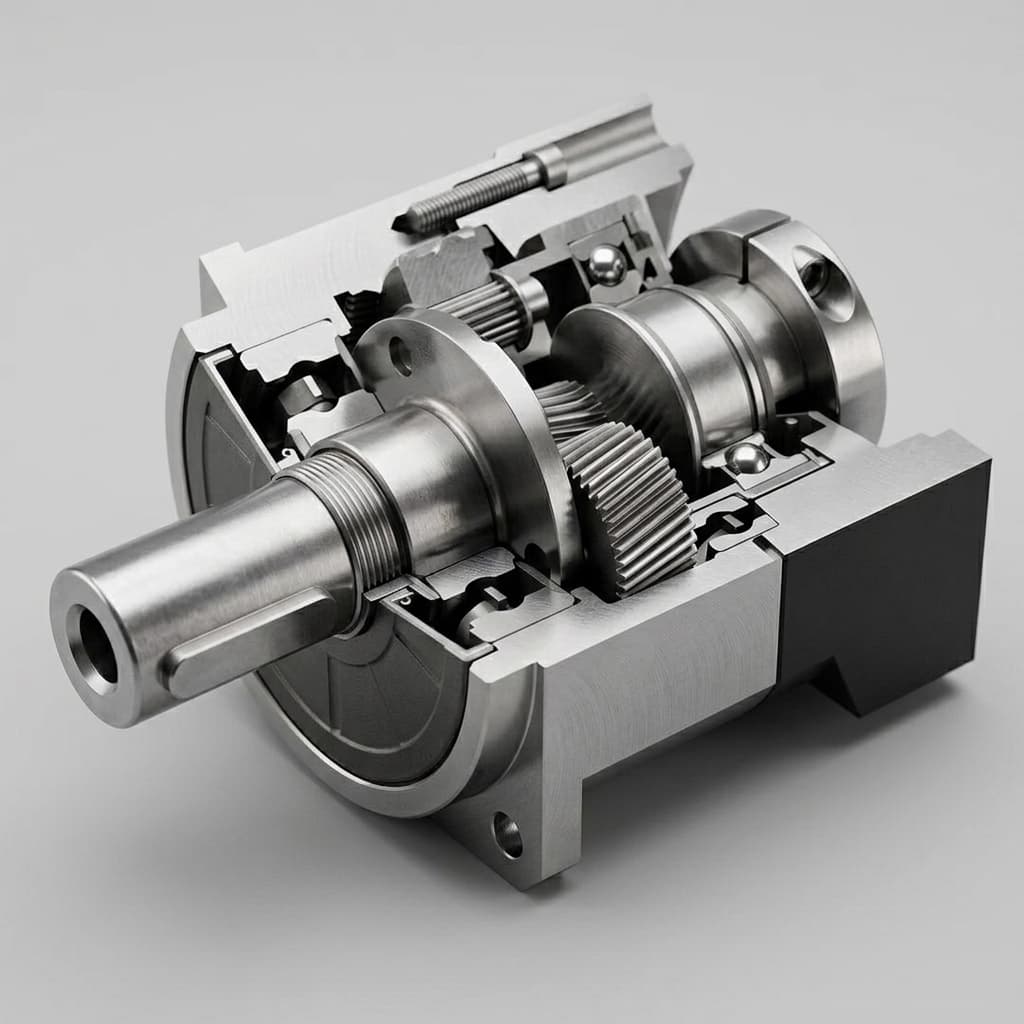
What is the "Thermal Wall" in Humanoid Robotics?
The "thermal wall" refers to the physical limit of heat dissipation in compact robotic actuators. A humanoid robot is essentially a walking thermal management system. Unlike industrial robot arms that have massive cast-iron or thick aluminum chassis acting as infinite heat sinks, a humanoid robot must be lightweight.
To achieve a human-like form factor, actuator joints are engineered to be as compact as possible. Internal gaps between the frameless motor stator and the housing are often less than 2mm. When the motor draws high current to hold a squat position or catch a falling load, I²R (copper) losses generate rapid heat.
Because the housing is sealed to protect against dust and moisture (often aiming for IP54 to IP65 ratings), convective air cooling is practically non-existent. The heat must be conducted through the stator, into the housing, and radiated out into the ambient air. If the rate of heat generation exceeds the rate of conduction and radiation, the internal temperature spikes.
The Consequences of Thermal Saturation
When a joint hits the thermal wall, several catastrophic failures can occur if the firmware does not intervene:
- Winding Insulation Failure: The enamel coating on the copper wire melts, causing a short circuit.
- Thermal Demagnetization: NdFeB (Neodymium) permanent magnets lose their magnetic flux at high temperatures. While some loss is reversible, exceeding the maximum operating temperature (often 120°C to 150°C for high-grade magnets) causes irreversible demagnetization, permanently reducing the motor's torque constant (Kt).
- Driver Component Degradation: MOSFETs and capacitors in the integrated motor controller degrade rapidly above 105°C, reducing the lifespan of the electronics.
To prevent this, the motor driver's firmware will artificially throttle the current limit as the temperature rises. This is known as thermal derating. A joint advertised as having a "100 Nm peak torque" might only be capable of delivering 30 Nm of continuous torque at thermal equilibrium.
Peak Torque vs. Continuous Torque: The Procurement Trap
The most common mistake buyers make when sourcing humanoid joints is comparing suppliers based on peak torque per dollar.
Supplier A might offer a joint with 120 Nm peak torque for $800. Supplier B might offer a joint with 100 Nm peak torque for $1,200. On paper, Supplier A looks like the better value. However, Supplier A's motor might be poorly potted, with a thin housing that cannot dissipate heat. Its continuous torque rating might only be 20 Nm. Supplier B, using an optimized thermal path and high-conductivity potting compounds, might sustain a continuous torque of 45 Nm.
If your robot requires 35 Nm of continuous torque to maintain a dynamic walking gait, Supplier A's joint will fail in the field, while Supplier B's will succeed.
When drafting your RFQ, you must define the duty cycle and the continuous operating point (Nm @ rpm). Never accept a quote that only guarantees a peak torque value without an accompanying thermal derating curve. If your team is still deciding whether to buy modules or assemble motors, reducers, encoders, and drives in-house, use the in-house assembly vs. pre-integrated joint module guide before locking the procurement path.
The Material Trilemma: Aluminum, Magnesium, and PEEK
The housing material of the integrated joint plays a massive role in moving heat away from the stator. However, procurement teams must balance thermal conductivity (W/m·K) against weight (density) and the coefficient of thermal expansion (CTE).
Aluminum Alloys (e.g., 6061-T6, 7075-T6)
Aluminum is the industry standard for joint housings. It offers excellent thermal conductivity (150–200 W/m·K) and is easy to machine. However, Al 7075-T6 has a relatively high CTE. When the joint heats up, the aluminum housing expands faster than the steel components of the harmonic drive or the stator lamination stack. If tolerances are not perfectly engineered, this expansion can alter the gear mesh, introducing backlash, or reduce the interference fit holding the stator in place.
Magnesium Alloys
Magnesium is roughly 33% lighter than aluminum and has decent thermal conductivity (around 70-120 W/m·K depending on the alloy). It is an attractive option for reducing the weight of the humanoid's limbs. However, it is more expensive to machine safely (due to flammability risks), susceptible to galvanic corrosion, and provides slightly worse thermal performance than premium aluminum alloys.
Engineering Plastics (e.g., PEEK)
To cut weight by 40-50%, some advanced actuator designs replace sections of the metal housing with high-performance polymers like Polyether ether ketone (PEEK). While PEEK is incredibly strong and lightweight, it is a thermal insulator (conductivity around 0.25 W/m·K). If a supplier proposes a PEEK housing, you must aggressively question their thermal pathway. Heat must be routed away from the polymer components, often requiring specialized heat pipes or relying entirely on a metal sub-chassis.
For motor-stack decisions, separate the housing question from the electromagnetic package. A frameless torque motor stator and rotor assembly may look adequate on torque constant alone, but the final joint rating still depends on potting, housing contact, reducer losses, driver placement, and the robot-level duty cycle.
Potting Compounds: The Invisible Heat Bridge
Even if you have a highly conductive aluminum housing, heat cannot jump across air gaps effectively. The microscopic voids between the motor stator and the internal housing wall act as thermal insulators.
Premium joint manufacturers solve this by using high thermal conductivity potting compounds—specialized epoxy or silicone resins poured into the stator cavity. These compounds (often rated at 2.0 to 4.0 W/m·K) displace the air and create a solid thermal bridge between the copper windings and the outer shell.
When auditing a supplier, ask whether their stators are potted. A non-potted motor is cheaper to manufacture but will hit the thermal wall significantly faster than a potted equivalent.
Active vs. Passive Cooling Limitations
Why not just add a fan? Active air cooling is common in industrial settings, but it is problematic for humanoid robots.
- Fans add bulk, breaking the anthropomorphic form factor.
- Fans consume power, draining the robot's battery.
- Fans require intake and exhaust vents, destroying the joint's IP rating and exposing internal components to dust and moisture.
Some cutting-edge research involves evaporative cooling using phase-change hydrogels, or routing liquid cooling lines through the robot's limbs. However, for commercial OEM procurement today, you must rely on passive conductive cooling. The joint must be sized correctly from day one so that its passive thermal dissipation rate matches the continuous duty cycle of your application.
Thermal Constraints & Procurement Trade-offs
When evaluating supplier proposals, use this matrix to understand what you are actually buying when a vendor changes a specification to lower the price or reduce the weight.
| Component / Spec Change | Benefit to Buyer | Thermal Consequence | Engineering Risk |
|---|---|---|---|
| Switch Al 7075 to Magnesium | Reduces joint weight by ~30% | Lowers thermal conductivity; heat builds up faster. | Susceptible to galvanic corrosion in humid environments. |
| Switch Aluminum to PEEK Housing | Massive weight reduction; radio transparent. | Traps heat inside the joint (0.25 W/m·K). | Severe thermal derating; requires alternate heat path. |
| Removing Potting Compound | Reduces unit cost; easier to rework/repair. | Air gaps act as insulators; winding temps spike. | Premature winding insulation failure. |
| Specifying N52 vs N35SH Magnets | Higher peak torque capability. | N52 has lower max operating temp than SH grades. | Irreversible thermal demagnetization during peak loads. |
| Sealing to IP65 | Dust-tight and water-jet resistant. | Eliminates convective air cooling entirely. | Steady-state continuous torque drops by 15-25%. |
| Reducing Housing Thickness | Lighter weight; smaller outer diameter. | Less thermal mass to absorb peak transient heat. | Faster temperature spikes during sudden high-load events. |
| Increasing Gear Ratio | Higher output torque with smaller motor. | Higher input speeds generate more friction heat. | Gearbox lubricant breakdown at high temperatures. |
| Integrating Motor Driver Internally | Fewer external cables; cleaner robot design. | Driver PCBs absorb motor heat directly. | Component failure if temp exceeds 105°C (MOSFET limits). |
Sizing Joints for Thermal Compliance: RFQ Checklist
Do not let your supplier guess your thermal limits. Use this checklist when defining your RFQ to ensure the quoted joint will survive your application.
- Define the Duty Cycle: What percentage of the time is the joint active vs. resting? (e.g., 20 seconds active / 10 seconds rest).
- Define the Continuous Torque Profile: Specify the exact RMS (Root Mean Square) torque required over your standard walking gait or work cycle.
- Define Ambient Temperature Limits: A joint rated for 30 Nm continuous at 20°C ambient might only deliver 20 Nm at 40°C ambient. State your maximum ambient operating environment.
- Demand a Thermal Derating Curve: Never accept a single "continuous torque" number. Ask for the torque vs. speed curve overlaid with thermal limits.
- Specify Magnet Grades: If your application involves high heat, mandate high-temperature Neodymium grades (e.g., UH, EH, or AH suffixes) rather than standard grades.
- Confirm Potting Procedures: Verify that the stator is thermally potted to the housing.
- Request Housing CTE Data: Ask how the supplier validates gear mesh tolerances at maximum operating temperature (e.g., 85°C).
- Define IP Rating Requirements: Explicitly state if the joint will be used in sealed environments.
Mid-RFQ action: send your RMS torque profile, ambient limit, target IP rating, and expected validation cycle to [email protected]. Ask for a thermal sizing review before you compare unit prices.
Sourcing and Validation: Real-World Acceptance Testing
Once you receive prototype samples, you must validate the thermal wall in your own lab. Do not rely solely on the supplier's datasheet.
Set up a dynamometer test stand. Run the joint at your required continuous RMS torque and monitor the internal thermistor temperature. If the temperature curve does not flatten out below the maximum safe limit (usually around 85°C to 100°C for the housing), the joint is undersized for your application.
You must also perform a "heat soak" test. Run the joint until it reaches thermal equilibrium, and then command a peak torque event (like catching a falling weight). Ensure the firmware correctly manages the thermal overhead without tripping into a hard fault and dropping the load.
Tie thermal acceptance to factory and shipment controls. The sample approval plan should reference both manufacturing QA audit gates and delivery compliance documentation, because a thermally valid prototype can still fail launch if CTQ records, RoHS/REACH files, or packing controls are not release-ready.
Frequently Asked Questions (FAQ)
Q: Why can't I just use software to prevent the joint from overheating?
A: You can, and you must. Firmware thermal throttling is a mandatory safety feature. However, if you rely on software throttling to protect an undersized joint, your robot will arbitrarily slow down, weaken, or stop moving entirely during normal operation. Software protects the hardware, but proper physical sizing ensures performance.
Q: Does a higher gear ratio help with thermal management?
A: It is a double-edged sword. A higher gear ratio (e.g., 100:1 instead of 50:1) allows you to use a smaller motor, which draws less current to produce the same output torque, generating less I²R heat. However, the motor must spin twice as fast, generating more iron losses (eddy currents) and significantly more friction heat in the reducer gear itself.
Q: Are liquid-cooled humanoid joints viable for OEM production?
A: For research platforms and extremely high-end specialized robots, yes. For commercial, mass-market humanoid robots, liquid cooling introduces immense complexity, weight, leakage risks, and maintenance overhead. The industry consensus is currently focused on optimizing passive conduction and advanced housing materials.
Q: How does altitude affect joint cooling?
A: If your robot operates at high altitudes (e.g., in mountainous regions or inside unpressurized aircraft cargo holds), the thinner air has lower thermal mass and provides worse convective cooling. You will hit the thermal wall faster and must apply a secondary derating factor to your continuous torque calculations.
Overcoming the Thermal Wall with HumanoidJoint.com
Sourcing high-performance actuators that survive continuous duty cycles requires a partner who understands the physics behind the specifications. We engineer our integrated joint modules with optimized thermal pathways, premium potting compounds, and transparent derating data so you can build with confidence.
If you are struggling with joints that overheat during validation, or if you need an architecture review before you finalize your BOM, we can help. Contact our engineering team at [email protected], reach out via WhatsApp at +86 18857971991, or start from the contact page for a thermal sizing consultation.
Sources
The engineering constraints and supply-chain realities discussed in this guide are synthesized from recent industry developments and research in humanoid thermal management. URL availability was checked during the June 23, 2026 publication review; two publisher pages may return access controls while still being valid references.
| Source Title / Reference | Date / Access Note | Why it Matters | URL |
|---|---|---|---|
| Humanoid robot mass production hits a thermal wall (Digitimes) | 2026; URL returned HTTP 200 during review. | Confirms the industry bottleneck regarding the less-than-5 cm³ cooling space and the limitations of sealed housings in mass-produced humanoid joints. | View Source |
| Highly efficient evaporative cooling... based on phase change hydrogels (ScienceDirect) | 2026; publisher URL may return HTTP 403 depending on access path. | Validates that extreme compact structures in high-power density joint motors lead to severe heat accumulation, limiting performance. | View Source |
| Thermal Management of Humanoid Robots (AI Robots Eidos) | 2026; URL returned HTTP 202 during review. | Details the space constraints of air cooling (fans) inside joints and discusses topology-optimized thermal management via housing fins. | View Source |
| Cut humanoid robot joint actuator weight by 40–50% (PatSnap) | 2026; URL returned HTTP 200 during review. | Provides material property context for procurement, comparing Aluminum 7075-T6 (150–200 W/m·K) against insulative materials like PEEK. | View Source |
| Humanoid Robot Joint CNC Machining: Tolerances & Specs (DakingsRapid) | 2026; publisher URL may return HTTP 403 depending on access path. | Highlights the Coefficient of Thermal Expansion (CTE) challenges when using fast-machining aluminum for precise joint tolerances under heat load. | View Source |
Explore more procurement strategies on our Blog, compare high-efficiency Products, or review the humanoid actuator planner for robot-level architecture decisions.
Author

Categories
More Posts
In-House Assembly vs. Pre-Integrated Humanoid Joint Modules: A 2026 Scalability & Cost Analysis
A comprehensive 2026 cost and scalability analysis comparing in-house joint assembly against sourcing pre-integrated actuator modules for humanoid robots.
Admittance vs Impedance Control: Architecture Decision Guide
A deep dive comparing admittance vs impedance control in robotics. Learn the causality differences, hardware dependencies (gearing, sensors), and execution risks.
Active Short Circuit (ASC) vs. Mechanical Brakes in Humanoid Joints: Sourcing for ISO 13482
Compare ASC vs mechanical brakes for humanoid joints in 2026 sourcing. See SGF, BOM, weight, ISO 13482 limits, and RFQ checks before contacting engineering.