
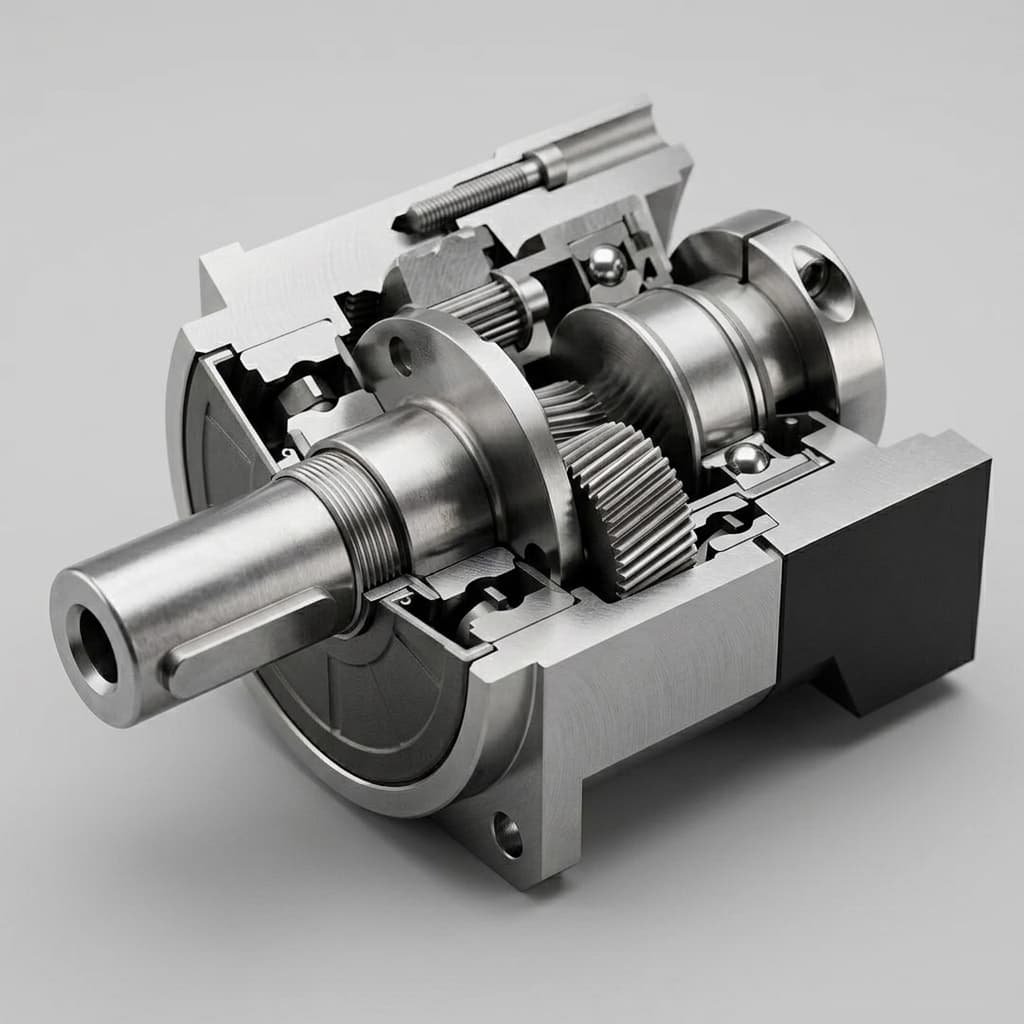
48V vs. 400V Humanoid Joint Architectures: A 2026 Procurement and Supply Chain Guide
Use this 2026 guide to compare 48V and 400V humanoid joint architectures by safety, wiring weight, TCO, supplier risk, and RFQ readiness.
In 2026 procurement reviews, humanoid OEMs are moving beyond one-off lab prototypes and asking whether joint platforms can be built, certified, serviced, and sourced at scale. Locomotion and perception software are still hard problems, but for hardware teams a more immediate constraint is becoming visible: The Power Wall.
As humanoid robots are tasked with carrying heavier payloads (often exceeding 25 kg per arm) and executing highly dynamic tasks (such as jumping, rapid recovery from disturbances, or sustained heavy lifting where impedance control algorithms shine), the peak power demands on individual joint modules—particularly in the hips and knees—can exceed 1.5 to 2.5 kilowatts per joint during transient spikes. Delivering this much power across a highly articulated, multi-degree-of-freedom chassis forces engineering and procurement teams to make a critical architectural decision early in the product lifecycle: Should the robot operate on a standard 48V electrical bus, or transition to a high-voltage 400V (or higher) architecture?
This decision is not merely an engineering preference. It dictates the entire supply chain, determines the vendor ecosystem, dictates safety certification compliance costs, and ultimately governs the Total Cost of Ownership (TCO) of the platform. For procurement teams, supply chain managers, and lead hardware engineers, understanding the sourcing implications of the 48V vs. 400V debate is paramount to bringing a viable, profitable humanoid robot to market.
Scope and method: This guide is written for global OEM procurement and hardware teams evaluating battery-electric humanoid platforms in July 2026. Cost and lead-time ranges below are directional planning bands based on public power-electronics guidance, robotics safety standards, distributor availability patterns, and medium-volume RFQ assumptions; they are not a substitute for certified safety review, supplier quotations, or market-specific compliance sign-off.
1. The Physics of Power Distribution in Humanoids
Before analyzing the commercial and sourcing implications, it is crucial to understand the physical realities driving this architectural split. The fundamental equation of electrical power is simple: Power = Voltage × Current ($P = V \times I$).
To deliver 2,000 watts of peak power to a knee joint actuator using a traditional 48V system, the internal wiring, connectors, slip rings, and motor controller must handle over 41 Amps of current.
High current is the enemy of humanoid robot design. Resistive power loss (which manifests as waste heat) is calculated as P_loss = I² × R. Because the heat generated scales with the square of the current, those 41 Amps generate massive thermal loads inside the confined space of a robot limb. Furthermore, to safely carry 41 Amps without melting, the robot must use thick, heavy gauge copper wiring (e.g., 8 AWG or thicker).
When a humanoid robot requires 30+ highly dynamic joints, the cumulative weight of this thick copper cabling can add several kilograms to the robot's overall mass. Because a humanoid must carry its own weight, every gram of copper added to the arms or torso requires the leg actuators to work harder, which requires more current, which generates more heat—creating a vicious design cycle.
If the OEM instead shifts to a 400V architecture, delivering that same 2,000 watts of peak power only requires 5 Amps of current. This allows the use of vastly thinner, lighter wiring, practically eliminates $I^2R$ cabling heat losses, and drastically reduces the overall mass of the robot's wiring harness.
2. The 48V Architecture: The Industry Standard
For the vast majority of commercial humanoid robots today, the 48V bus is the undisputed king. This dominance is not necessarily because 48V is the theoretical maximum for performance, but because it represents the perfect intersection of regulatory safety and supply chain maturity.
The SELV Safety Threshold
The most critical advantage of a 48V nominal system is that, with controlled overvoltage and proper isolation, it can remain inside the 60V DC normal-condition limit commonly used for SELV/PELV power-supply interpretation. Exact thresholds vary by product standard and market, so the architecture review must be confirmed with the responsible NRTL, notified body, or local safety engineer before release.
If a technician or a factory worker accidentally exposes or touches a live 48V terminal, the shock risk is far lower than with exposed 400V DC, but it is not zero: stored energy, short-circuit current, hot surfaces, and conductive tools still need controls. Even so, humanoid joints operating at 48V usually avoid the full high-voltage isolation boundary, reinforced dielectric stack-up, and High-Voltage Interlock Loop (HVIL) architecture required for 400V systems. This simplifies assembly, reduces the need for high-voltage-certified technicians, and lowers the regulatory burden for robots deployed around people.
A Robust, Commoditized Supply Chain
Because 48V is heavily utilized in the telecommunications sector, server farms, and modern mild-hybrid automotive architectures, the ecosystem for 48V components is deep and highly competitive.
- Motor Drivers (FOCs): There are hundreds of Tier-1 and Tier-2 suppliers offering mature, high-efficiency Field-Oriented Control (FOC) drivers rated for 48V.
- MOSFETs and Switches: High-efficiency Gallium Nitride (GaN) and Silicon Carbide (SiC) MOSFETs optimized for 48V are plentiful, cheap, and have short lead times.
- Connectors: 48V compliant connectors are off-the-shelf commodities, sourced globally with multiple redundancies.
For a procurement team, a 48V architecture means low supplier risk, high leverage in pricing negotiations, and the ability to dual-source nearly every component on the joint module's BOM.
3. The 400V Architecture: The High-Power Frontier
If 48V is so safe and easy to source, why are several bleeding-edge humanoid robotics companies exploring 400V (or even 800V) architectures?
The answer lies in the uncompromising demands of agility and dynamic payloads. When a humanoid is designed not just to walk slowly, but to carry heavy crates, leap over gaps, or catch falling objects, the transient power spikes overwhelm 48V limits. The thickness of cables required to route 400+ Amps of total system current across a robot chassis becomes physically prohibitive.
The Weight and Space Dividend
Moving to 400V slashes the required current by roughly a factor of 8. This allows engineers to route power through the robot's joints using wires not much thicker than those found in a standard household appliance. In a complex, tight assembly like a humanoid shoulder or ankle joint, recovering that physical volume is a massive mechanical advantage. It allows for tighter packaging, larger bearings, or better structural ribbing, improving the overall rigidity and durability of the robot.
The Sourcing Penalty of High Voltage
However, the 400V path introduces brutal realities for procurement and manufacturing teams:
- Lethal Voltage: 400V DC is lethal. Designing a robot that constantly bends, twists, and impacts the ground with 400V running through its limbs requires aerospace-grade wire insulation and chafing protection.
- HVIL Requirements: Every joint and connector must feature a High-Voltage Interlock Loop (HVIL). This is a dedicated low-voltage circuit that verifies every connector is fully seated; if a connector is unplugged or severed, the HVIL breaks, instantly triggering contactors in the battery to cut the 400V supply before a human can touch the exposed wire. Sourcing robust, compact, and dynamic HVIL connectors designed for constant motion is incredibly difficult and expensive.
- Component Scarcity: Integrated joint modules natively designed for 400V are rare. Procurement teams cannot simply buy off-the-shelf robotic joint modules; they often must co-develop them with suppliers. High-voltage motor drivers small enough to fit inside a humanoid joint (rather than a bulky electric vehicle chassis) represent a massive technological hurdle and are currently supplied by only a handful of vendors globally.
4. Cost and Sourcing Analysis: 48V vs. 400V TCO
To objectively evaluate the two approaches, procurement and engineering must align on the Total Cost of Ownership (TCO), accounting for BOM, assembly complexity, and certification costs over a projected 5,000-unit production run.
| Sourcing & Engineering Metric | 48V Architecture (SELV) | 400V High-Voltage Architecture | Procurement Implication |
|---|---|---|---|
| BOM Cost per Joint Module | $1,200 - $2,500 | $2,800 - $4,500+ | 400V carries a 50-80% premium due to specialized high-voltage components. |
| Component Lead Times | 8 - 12 Weeks (Standard) | 24 - 36+ Weeks (Often Custom) | 400V creates significant supply chain fragility and requires long-term forecasting. |
| Vendor Ecosystem | Broad (Hundreds of Tier-2s) | Extremely Limited (A few EV/Aero Tier-1s) | Lack of competition in the 400V compact robotics space limits negotiation power. |
| Wiring Harness Weight | High (Thick copper, heavy gauge) | Very Low (Thin, flexible wire) | 400V drastically improves payload capacity and agility metrics. |
| Safety Certification Cost | Moderate (Standard CE / UL) | High (Requires rigorous HV testing, ISO 13482) | 400V requires dedicated safety engineering and external auditing overhead. |
| Thermal Management Needs | High (I²R losses in cables/joints) | Low (Current is minimized) | 400V allows for smaller heat sinks, saving further weight and space. |
| Assembly Labor Requirements | Standard Electromechanical Technicians | High-Voltage Certified Technicians | 400V increases factory labor rates and introduces severe liability/safety protocols. |
Table Note: Pricing and lead-time ranges are planning estimates for mid-2026 medium-volume procurement of humanoid joint actuators. Refresh them with supplier quotes, regional certification scope, and production yield data before purchase-order release.
The data highlights a clear divergence. The 48V architecture optimizes for cost, scale, and speed-to-market. The 400V architecture sacrifices supply chain ease and cost to achieve the absolute maximum physical performance and power density.
5. Engineering and Procurement Sourcing Checklist
If your organization is finalizing the power architecture for a new humanoid platform, both the procurement and engineering teams must cross-validate their requirements before locking in a vendor. Use this checklist to ensure complete alignment:
- Peak Power Profiling: Has the engineering team provided the absolute peak transient power required per joint? (If it's under 1.5kW, stick to 48V).
- Regulatory Market Audit: Are you deploying in regions or use-cases (e.g., consumer-facing environments) where high-voltage architectures will face insurmountable certification hurdles?
- Supplier Dual-Sourcing: If leaning toward 400V, do you have at least two validated suppliers capable of producing high-voltage micro-drives, or are you locked into a single point of failure?
- Connector Lifecycle Testing: Humanoid joints flex millions of times. Have the high-voltage connectors and their HVIL loops been tested for extreme dynamic flexure over a 5-year simulated lifecycle?
- Labor Capability: Does your final assembly facility possess the safety protocols, isolation mats, and certified personnel required to safely build and test 400V DC systems?
- Thermal Limits: For 48V systems, have you calculated the exact heat dissipation required for the thick gauge wiring during sustained walking/lifting cycles?
- Compliance Documentation: Can the supplier provide comprehensive RoHS, REACH, and CE compliance files that specifically cover their high-voltage isolation strategies?
6. Sourcing FAQ: Voltage and Humanoid Joints
Q: Can we run a hybrid system? (e.g., 400V for the heavy leg joints, 48V for the arms)?
A: Yes, hybrid architectures are becoming a compelling middle ground. However, this requires an internal high-efficiency DC-DC step-down converter (400V to 48V) inside the robot's torso. This component is expensive, generates its own heat, and adds weight, but it allows OEMs to utilize cheap, off-the-shelf 48V actuators for the arms and neck while reserving custom 400V power for the hips and knees.
Q: Are there 48V systems that can handle 2.5kW+ peaks without overheating?
A: Yes, but they rely heavily on active thermal management (e.g., liquid cooling loops or forced air) and very short duty cycles. If a 48V joint needs to sustain 2.5kW for more than a few seconds, the physical size of the required copper and heat sinks makes it unviable for a humanoid form factor.
Q: If we choose a pre-integrated 48V joint module, do we need to worry about the internal driver design?
A: Absolutely. While pre-integrated modules hide the complexity, procurement must audit the supplier's internal MOSFET selection and thermal potting compounds. A poorly designed 48V driver will suffer from thermal throttling, suddenly limiting the robot's torque mid-operation.
Q: Why don't we use standard industrial 400V AC servomotors?
A: Industrial AC servos are designed for factory floors where weight is irrelevant. They use heavy iron cores and thick steel housings. Humanoid robots require frameless, high-pole-count torque motors that offer maximum torque density per gram, operating on DC battery power.
7. The Future Outlook (2026 - 2030)
As we look toward the end of the decade, the industry will likely bifurcate. General-purpose humanoids designed for light logistics, domestic assistance, and retail will standardise entirely on highly optimized, deeply commoditized 48V (or 72V) architectures. The cost advantages of SELV compliance and a massive supplier base are too strong to ignore.
However, specialized humanoids—those designed for heavy industrial lifting, construction, military logistics, or disaster response—will inevitably transition to 400V or 800V systems. The performance gains in weight reduction and agility simply cannot be matched by low-voltage systems. For these high-end platforms, the supply chain will slowly mature as the robotics industry begins to adapt and miniaturize technologies currently used in high-performance electric vehicles.
8. Conclusion and Next Steps
The choice between a 48V and a 400V joint architecture is a foundational decision that impacts every department in a robotics company. 48V offers safety, speed, and a resilient supply chain. 400V offers uncompromising power and agility at the cost of extreme complexity and high BOM pricing.
For procurement professionals, locking in a reliable vendor who understands these trade-offs and can guarantee supply, yield, and thermal performance is the most critical task on the critical path to mass production.
Use this architecture decision alongside the humanoid joint RFQ checklist, the thermal-wall procurement guide, and the functional-safety sourcing guide before freezing your supplier shortlist.
Are you defining the BOM for your next-generation bipedal platform?
Whether your architecture demands the proven reliability of a mature 48V ecosystem or you are pushing the boundaries with custom high-voltage requirements, having the right integrated joint module partner is essential. Explore our portfolio of pre-integrated, thermally optimized joint actuators, or consult with our engineering team to discuss custom voltage specifications tailored to your platform's exact payload requirements.
Contact Our Engineering Sales Team to Discuss Your Architecture Needs →
Sources & References
- Delta Electronics (2026). "What is the difference between SELV, PELV and ES1 in AC/DC Power Supplies?" Explains SELV/PELV voltage limits, including the 60V DC normal-condition interpretation used in many power-supply contexts. Available: https://psu.deltaww.com/en/industry-know-how/what-is-the-difference-between-selv-pelv-and-es1-in-ac-dc-power-supplies
- Texas Instruments (2025). "48V Automotive Systems: Why Now?" Provides a transferable electrical-distribution reference for how higher low-voltage rails reduce wire gauge, load current, harness weight, and power loss. Available: https://www.ti.com/lit/SLYY243
- Texas Instruments (2024). "TIDA-020069 Automotive High-Voltage Interlock Loop (HVIL) Reference Design." Shows HVIL as safety circuitry for high-voltage battery cable connections and documents fault-monitoring design patterns. Available: https://www.ti.com/tool/TIDA-020069
- ISO (2026). "ISO/FDIS 13482 Robotics — Safety requirements for service robots." Frames safety requirements for service robots in personal and professional/commercial applications and notes that it will replace ISO 13482:2014. Available: https://www.iso.org/standard/83498.html
- Aptiv (2021). "What Is HVIL?" Explains HVIL as a continuous low-voltage monitoring loop used to protect people around high-voltage components during assembly, repair, maintenance, operation, and accidents. Available: https://www.aptiv.com/en/insights/article/what-is-hvil
(Note: Data and pricing projections in this report reflect the 2026 state of the humanoid actuator supply chain.)
Author

Categories
More Posts

DDP, RoHS, and REACH Playbook for Humanoid Joint Imports
A buyer-side execution guide to align delivery terms, compliance files, and shipment release decisions before cross-border dispatch.

Research: Humanoid Joint Functional Safety
Draft research on humanoid joint safety
The Humanoid Joint Thermal Wall: Sizing & Procurement Guide for OEM Buyers
Size continuous torque, compare materials, request derating data, and contact us with RFQ inputs using this humanoid joint thermal wall guide.